การพัฒนาวิธีตรวจหาแบคทีเรียประจาถิ่นแบบรวดเร็วด้วยเทคนิคเทคโนโลยีชีวภาพโมเลกุล เพื่อการควบคุมที่มีประสิทธิภาพในระบบบาบัดนาเสีย
Development of a rapid molecular biotechnology-based detection method for indigenous bacteria to enhance control efficiency in wastewater treatment systems
Keywords:
Industrial wastewater treatment system, Molecular biotechnology, Filamentous bacteriaAbstract
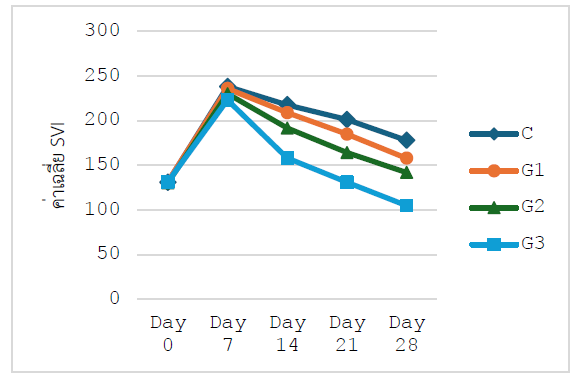
ปัญหาตะกอนบวม ซึ่งเกิดจากการเจริญอย่างเกินสมดุลของแบคทีเรียกลุ่มเส้นใย ส่งผลให้การแยกตะกอนจุลินทรีย์ในระบบบำบัดน้ำเสียแบบตะกอนเร่ง มีประสิทธิภาพลดลง การศึกษานี้มีวัตถุประสงค์เพื่อ 1) ระบุชนิดแบคทีเรียที่ไม่เป็นเส้นใยในระบบบำบัดน้ำเสียอุตสาหกรรมจริงด้วยเทคนิคเทคโนโลยีชีวภาพโมเลกุล และ 2) ทดสอบศักยภาพของแบคทีเรียที่ไม่เป็นเส้นใยที่คัดแยกได้ ในการควบคุมปัญหาดังกล่าว ศึกษาโดยเก็บตัวอย่างตะกอนจากระบบบำบัดที่กำลังประสบปัญหาตะกอนบวม นำมาเพาะเลี้ยงและคัดแยกเชื้อแบคทีเรีย จากนั้นนำมาวิเคราะห์ลักษณะสัณฐานวิทยาและระบุชนิดแบคทีเรียที่ไม่เป็นเส้นใยโดยการวิเคราะห์ลำดับยีน 16S rRNA ขั้นตอนต่อไปนำแบคทีเรียที่ไม่เป็นเส้นใยจากตะกอนที่มีเสถียรภาพดี เพื่อเสริมเข้าสู่ระบบปฏิกรณ์ชีวภาพจำลองที่มีการเหนี่ยวนำให้เกิดตะกอนบวม ผลการศึกษาพบว่า เชื้อที่คัดแยกได้มีลักษณะโคโลนีสีขาวขุ่น ผิวเรียบ ขอบเรียบ ผลการย้อมแกรมพบเป็นแท่งสั้นสีม่วงเรียงตัวเป็นสายสั้นๆ การวิเคราะห์ลำดับยีน 16S rRNA ระบุว่าเป็น คือ Bacillus cereus strain 1 และการเสริมแบคทีเรียที่ไม่เป็นเส้นใยที่คัดแยกได้สามารถช่วยลดสัดส่วนของแบคทีเรียเส้นใย ทำให้ค่าดัชนีปริมาตรตะกอนลดลงอย่างมีนัยสำคัญ และเพิ่มประสิทธิภาพการตกตะกอนของตะกอนจุลินทรีย์ได้ สรุปได้ว่า แนวทางบูรณาการที่ผสมผสานการวินิจฉัยเชิงโมเลกุลกับการควบคุมโดยชีววิธีนี้ เป็นกลยุทธ์ที่มีศักยภาพสูงและเป็นมิตรต่อสิ่งแวดล้อม ในการป้องกันและแก้ไขปัญหาตะกอนบวมได้อย่างจำเพาะเจาะจง อีกทั้งยังช่วยเพิ่มเสถียรภาพในการดำเนินงานและยกระดับคุณภาพน้ำทิ้งของระบบบำบัดน้ำเสียอุตสาหกรรมได้อย่างมีประสิทธิภาพ
Sludge bulking, caused by the overgrowth of filamentous bacteria, severely impairs the solid-liquid separation efficiency in activated sludge systems. This study aimed to (1) identify the causative filamentous bacteria in a full-scale industrial wastewater treatment plant using molecular biotechnology techniques, and (2) evaluate the potential of isolated non-filamentous bacteria for controlling and suppressing this problem. The research was conducted by collecting sludge samples from a treatment system experiencing bulking. The samples were cultured, and bacteria were isolated. Morphological analysis and 16S rRNA gene sequencing were employed to identify the dominant filamentous species. Subsequently, non-filamentous bacteria, isolated from well-settling sludge, were introduced as a bioaugmentation agent into laboratory-scale bioreactors where bulking had been induced. The results demonstrated that the augmentation with the selected non-filamentous bacteria effectively reduced the proportion of filamentous bacteria. This led to a significant decrease in the Sludge Volume Index (SVI) and a marked improvement in the sludge settleability. In conclusion, the integrated strategy combining molecular-based diagnosis with biological control presents a highly promising and environmentally friendly approach. It offers a targeted solution for preventing and remediating sludge bulking, thereby enhancing operational stability and improving the effluent quality of industrial wastewater treatment systems.