การศึกษาลักษณะและปริมาณแคลเซียมออกซาเลตในพืช C3 และ C4 ที่เป็นอาหารสัตว์
Comparative Analysis of Calcium Oxalate Characteristics and Quantity in C3 and C4 Forage Species
Keywords:
Characteristics and content of calcium oxalate, Permanganate TitrationAbstract
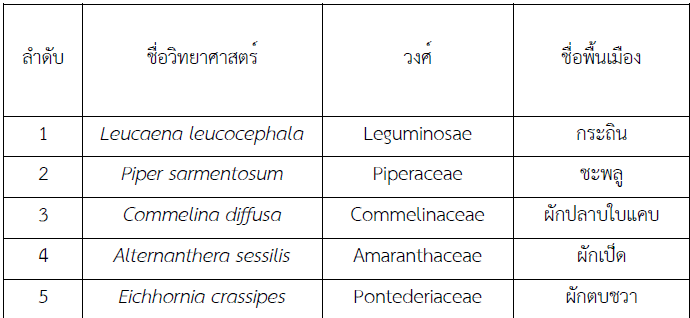
การศึกษาครั้งนี้มีวัตถุประสงค์เพื่อศึกษาลักษณะและปริมาณผลึกแคลเซียมออกซาเลตในพืชอาหารสัตว์ชนิด C3 และ C4 จำนวน 11 ชนิด โดยพืช C3 ได้แก่ กระถิน ผักปลาบ ผักเป็ดไทย ถั่วเขียว ตำลึง ผักตบชวา และชะพลู ส่วนพืช C4 ได้แก่ บานไม่รู้โรยป่า ผักโขม หญ้าขน และหงอนไก่ป่า การศึกษาประกอบด้วย 2 ตอน ได้แก่ การศึกษาลักษณะผลึกแคลเซียมออกซาเลตด้วยเทคนิค Free Hand Cross Section ภายใต้กล้องจุลทรรศน์จากลำต้น ก้านใบ และใบ และการศึกษาปริมาณแคลเซียมออกซาเลตด้วยเทคนิค Permanganate Titration โดยใช้สารละลายโพแทสเซียมเปอร์แมงกาเนต (KmnO4) ทำปฏิกิริยากับออกซาเลตที่สกัดจากตัวอย่างพืชและคำนวณปริมาณแคลเซียมออกซาเลต จากสมการ Calcium Oxalate (g) = MKMnO4 × VKMnO4 × 5/2 × 128.1
ผลการศึกษาพบผลึกแคลเซียมออกซาเลต 3 ลักษณะ ได้แก่ รูปเข็ม (raphides) พบมากในก้านใบและใบของผักปลาบและผักตบชวา รูปดาว (druses) พบมากในก้านใบและลำต้นของผักเป็ดไทยและผักปลาบ และรูปปริซึม (prismatic) พบในลำต้นและก้านใบของผักโขม สำหรับปริมาณแคลเซียมออกซาเลตโดยรวม พบมากที่สุดในกระถิน (0.199 g) รองลงมาคือ ชะพลู (0.100 g) หงอนไก่ป่า (0.087 g) และผักโขม (0.084 g) ขณะที่ถั่วเขียวพบปริมาณต่ำที่สุด (0.041 g) เมื่อพิจารณาตามส่วนของพืช พบว่าใบเป็นส่วนที่มีปริมาณแคลเซียมออกซาเลตสูงที่สุด โดยกระถินมีปริมาณสูงสุดในใบ (0.320 g) และก้านใบ (0.186 g) ส่วนลำต้นพบมากที่สุดในบานไม่รู้โรยป่า (0.068 g) สรุปได้ว่าพืชอาหารสัตว์ทั้งพืช C3 และ C4 มีลักษณะผลึกแคลเซียมออกซาเลต 3 รูปแบบ ได้แก่ รูปเข็ม รูปดาว และรูปปริซึม และมีปริมาณแคลเซียมออกซาเลตไม่แตกต่างกัน ข้อมูลที่ได้สามารถนำไปใช้เป็นพื้นฐานในการพัฒนานวัตกรรมการใช้พืชเพื่อลดปริมาณก๊าซคาร์บอนไดออกไซด์ในบรรยากาศต่อไป
This study aimed to investigate the characteristics and content of calcium oxalate in 11 species of C3 and C4 forage plants. The C3 group included Leucaena (Krathin), Common spiderwort (Phak Plab), Lesser joyweed (Phak Pet Thai), Mung bean, Ivy gourd, Water hyacinth, and Wild betel leaf (Chaplu). The C4 group consisted of Gomphrena celosioides (Ban Mai Ru Roi Pa), Amaranth, Para grass, and Silver cockscomb (Ngon Kai Pa). Methodology: The research was divided into two parts: 1) Morphological characterization using the Free Hand Cross Section technique under light microscopy, focusing on the stems, petioles, and leaves; and 2) Quantitative analysis using the Permanganate Titration technique with KMnO4 solution to determine the calcium oxalate content.
Results:
- Morphological Characteristics: Three crystal forms were identified: Raphides (predominantly in the petioles and leaves of Common spiderwort and Water hyacinth), Druses (primarily in the petioles and stems of Lesser joyweed and Common spiderwort), and Prismatic crystals (found in the stems and petioles of Amaranth).
- Quantitative Analysis: The total calcium oxalate content (g) ranked from highest to lowest was: Leucaena (0.199), Wild betel leaf (0.100), Silver cockscomb (0.087), Amaranth (0.084), Para grass (0.069), Gomphrena and Common spiderwort (0.068), Lesser joyweed (0.061), Ivy gourd (0.057), Water hyacinth (0.043), and Mung bean (0.041).
Part-specific analysis (g):
- Stems: Highest in Leucaena (0.048) and lowest in Common spiderwort (0.006).
- Petioles: Highest in Leucaena (0.186) and lowest in Mung bean (0.031).
- Leaves: Highest in Leucaena (0.320) and lowest in Water hyacinth (0.024).
Conclusion: The three types of calcium oxalate crystals found were raphides, druses, and prismatic. There was no significant difference in the calcium oxalate content between C3 and C4 plants. Recommendation: These findings can be utilized to develop innovations for using plants to reduce atmospheric carbon dioxide.