การประเมินคาร์บอนฟุตพริ้นท์องค์กรเพื่อพัฒนาอย่างยั่งยืน: กรณีศึกษาสานักดิจิทัลเทคโนโลยี มหาวิทยาลัยศิลปากร
Assessment of Organizational Carbon Footprint for Sustainable Development
Keywords:
Carbon footprint of organization, Greenhouse gas emissions, Organizational development , Sustainability, Environmental managementAbstract
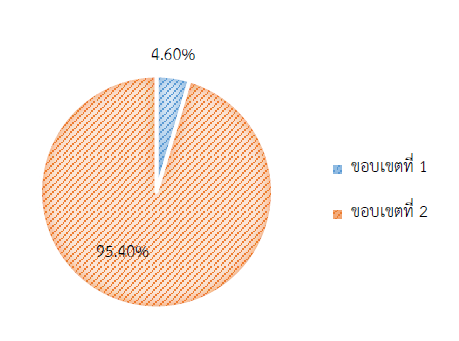
การปล่อยก๊าซเรือนกระจกจากการดำเนินงานขององค์กรถือเป็นปัญหาสำคัญที่ส่งผลกระทบต่อการเปลี่ยนแปลง สภาพภูมิอากาศ งานวิจัยนี้จึงดำเนินการประเมินคาร์บอนฟุตพริ้นท์องค์กรของสำนักดิจิทัลเทคโนโลยี มหาวิทยาลัยศิลปากรในปีงบประมาณ พ.ศ. 2568 เพื่อให้ทราบถึงแหล่งกำเนิดและเพื่อเสนอแนวทางในการลด ผลการศึกษาพบว่าสำนักฯ มีปริมาณการปล่อยก๊าซเรือนกระจกในขอบเขตที่ 1 และขอบเขตที่ 2 เท่ากับ 4 และ 83 ตันคาร์บอนไดออกไซด์เทียบเท่าต่อปี (tonCO2eq/year) ตามลำดับ ซึ่งเป็นไปตามสมมติฐานที่คาดว่าการปล่อยก๊าซเรือนกระจกจากการใช้ไฟฟ้า (ขอบเขตที่ 2) จะมีสัดส่วนสูงที่สุด คิดเป็นร้อยละ 95.40 ของการปล่อยก๊าซเรือนกระจกทั้งหมด อย่างไรก็ตาม การรั่วไหลของสารทำความเย็นชนิด R-22 จากเครื่องปรับอากาศที่มีอายุการใช้งานนานเกิน 10 ปี ยังคงเป็นประเด็นสำคัญที่ต้องให้ความสำคัญแม้จะถูกรายงานแยก ผลจากการศึกษานี้สามารถนำไปใช้ในการกำหนดมาตรการเบื้องต้นในการปรับปรุงและพัฒนาองค์กรให้สามารถลดการปล่อยก๊าซเรือนกระจก ได้แก่ การสำรวจอุปกรณ์ไฟฟ้าที่มีความเสี่ยงในการรั่วไหลของสารทำความเย็นและพิจารณาการเปลี่ยนทดแทน และการกำหนดมาตรการในการลดการใช้ไฟฟ้า นอกจากนี้การประเมินยังแสดงให้เห็นถึงจุดที่เป็นประเด็นปัญหาของการเก็บข้อมูล เช่น ไม่มีมิเตอร์น้ำแยก มีการให้บริการพื้นที่สำหรับนักศึกษาและบุคลากรภายนอกสำนักฯ ซึ่งส่งผลให้การประเมินในขอบเขตที่ 3 ไม่สมบูรณ์ อย่างไรก็ตามการดำเนินมาตรการตามผลการศึกษานี้มีความสอดคล้องกับเป้าหมายการพัฒนาที่ยั่งยืนข้อที่ 13 และสามารถนำไปใช้เป็นข้อมูลพื้นฐานในการวางแผนบริหารจัดการองค์กรอย่างยั่งยืนต่อไป
Greenhouse gas (GHG) emissions from organizational operations represent a significant contribution to climate change. Accordingly, this study assesses the carbon footprint of the Bureau of Digital Technology, Silpakorn University in the budget year of 2025 with the objectives of quantifying GHG emissions source and identifying mitigation measures to reduce emissions. The results indicate that total GHG emissions in Scope 1 and Scope 2 are 135 and 88 tCO2eq/year, respectively. It was assumed that the emissions will be highest in Scope 2 from electricity consumption but it turns out to be Scope 1 which is accounted for 60.54% of total emissions. The major source is the leakage of R-22 refrigerant from air conditioner with the lifespan of more than 10 years. The results of this study can be applied to formulate initial strategies for organizational improvement and development, enabling a reduction in greenhouse gas emissions. For instance, an inspection of electrical appliances for potential refrigerant leaks, consideration of their replacement, and the establishment of measures to lower power usage. Furthermore, the assessment highlighted data collection challenges, such as the lack of separate water meters and the provision of services and space to students and personnel external to the organization. These factors resulted in an incomplete Scope 3 assessment. Nevertheless, implementing the measures derived from this study aligns with Sustainable Development Goal 13 and can serve as baseline data for future sustainable organizational management planning.