การหาลักษณะโปรไฟล์ของสารประกอบฟีนอลิกและฟลาโวนอยด์ในสารสกัดจากพืชวงศ์มะม่วง
Determination of phenolic and flavonoid profiles inAnacardiaceae plant extracts
Keywords:
Total Phenolic content and Total Flavonoid content, Decoction, Bouea oppositifolia (Roxb.) Meisn.Abstract
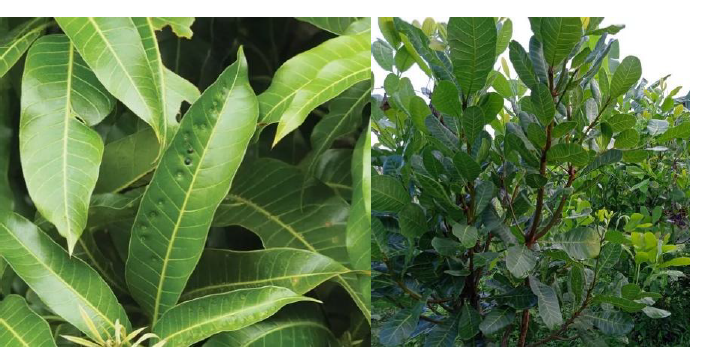
พืชในวงศ์มะม่วง (Anacardiaceae) จัดเป็นพืชที่มีความสำคัญทางเศรษฐกิจของประเทศไทย โดยเฉพาะมะม่วง มะม่วงหิมพานต์ และมะยงชิด ซึ่งทุกส่วนของพืชมักสะสมสารเมทาบอไลต์ทุติยภูมิกลุ่มฟีนอลิกและฟลาโวนอยด์ที่มีฤทธิ์ต้าน อนุมูลอิสระและต้านจุลชีพ การศึกษานี้มีวัตถุประสงค์เพื่อเปรียบเทียบปริมาณสารฟีนอลิกทั้งหมด (TPC) และปริมาณสาร ฟลาโวนอยด์ทั้งหมด (TFC) จากสารสกัดใบพืชทั้ง 3 ชนิด โดยใช้การสกัดด้วยน้ำและเมทานอล ที่อุณหภูมิ 60 องศาเซลเซียสวิเคราะห์ผลด้วยวิธี Folin-Ciocalteu และ Colorimetric ผลการศึกษาพบว่า สารสกัดด้วยน้ำมีค่า TPC สูงสุดในใบมะม่วง (48.55±0.60 mg GAE/g DW) รองลงมาคือใบมะม่วงหิมพานต์ และใบมะยงชิด ตามลำดับ สำหรับสารสกัดด้วยเมทานอลพบ TPC สูงสุดในใบมะม่วงหิมพานต์ (27.35±1.39 mg GAE/g DW) ในส่วนของปริมาณ TFC พบว่าใบมะม่วงให้ค่าสูงสุดในทั้งสองตัวทำละลาย โดยสารสกัดด้วยเมทานอลมีค่า TFC สูงถึง 148.47±7.96 mg QE/g DW ซึ่งสูงกว่าสารสกัดด้วยน้ำอย่างมีนัยสำคัญ ข้อมูลจากการศึกษานี้ชี้ให้เห็นศักยภาพของใบพืชในวงศ์มะม่วงในการพัฒนาเป็นสารสกัดเชิงพาณิชย์ อย่างไรก็ตาม ควรมีการศึกษาเพิ่มเติมเกี่ยวกับการหาสภาวะการสกัดที่เหมาะสมและวิเคราะห์สารสำคัญชนิดอื่น เพื่อประโยชน์ในการประยุกต์ใช้ในอุตสาหกรรมการแพทย์และเครื่องสำอางต่อไป
Plants in the Anacardiaceae family, particularly Mango (Mangifera indica L.), Cashew (Anacardium occidentale) and Marian Plum (Bouea oppositifolia (Roxb.) Meisn.), are economically significant in Thailand. These plants are rich in secondary metabolites, specifically phenolics and flavonoids, which exhibit potent antioxidant and antimicrobial properties. This study aimed to determine the Total Phenolic Content (TPC) and Total Flavonoid Content (TFC) of leaf extracts from these three species using two extraction solvents: water and methanol at 60°C. The results indicated that the aqueous extract of Mango leaves yielded the highest TPC (48.55+0.60 mg GAE/g extract), followed by Cashew and Marian Plum leaves, respectively. In contrast, the methanolic extract showed the highest TPC in Cashew leaves (27.35+1.39 mg GAE/g extract). Regarding flavonoid content, Mango leaf extracts exhibited the highest TFC in both solvents, with the methanolic extract reaching 148.47+7.96 mg QE/g extract. Overall, the solvent type significantly influenced the extraction efficiency of bioactive compounds. These findings suggest that leaves from the Anacardiaceae family are promising sources of natural antioxidants. Further research into extraction optimization and identification of specific bioactive compounds is recommended to facilitate their application in the pharmaceutical and cosmeceutical industries.