การวิเคราะห์ช่องว่างเชิงสถาบันในการประยุกต์ใช้กลไกการเงินแบบผสมผสาน เพื่อส่งเสริมการลงทุนของภาคเอกชนในโครงการโรงไฟฟ้าชีวมวลในประเทศไทย
Unlocking blended finance to mobilize private sector investment in biomass power plant projects: An analysis of institutional gaps in Thailand
Keywords:
Blended Finance Mechanism, Climate Finance, Community Biomass Power Projects in Thailand, Private Sector Investment, Institutional Analysis and Development (IAD) FrameworkAbstract
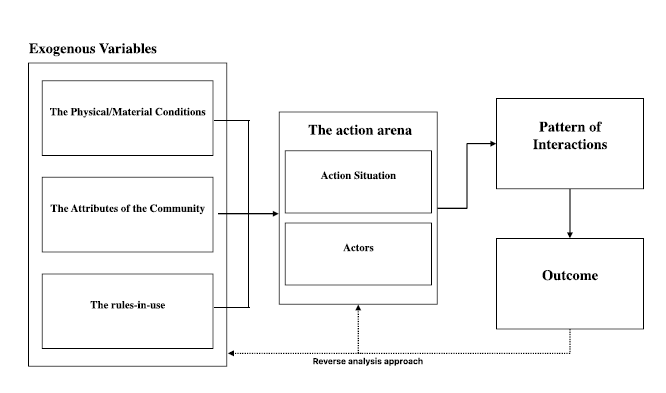
การศึกษาครั้งนี้มุ่งวิเคราะห์ปัจจัยเชิงสถาบันที่เกี่ยวข้องกับการใช้กลไกการเงินแบบผสมผสาน เพื่อส่งเสริมการลงทุนของภาคเอกชนในโครงการโรงไฟฟ้าชีวมวลชุมชนในประเทศไทย โดยมีวัตถุประสงค์เพื่อระบุปัจจัยเชิงสถาบันที่เป็นตัวสนับสนุนและช่องว่างเชิงสถาบันที่ส่งผลต่อความพร้อมของประเทศไทยในการนำกลไกการเงินแบบผสมผสานมาใช้ โดยใช้กรอบการวิเคราะห์และการพัฒนาสถาบันเป็นแนวทางในการศึกษา งานวิจัยนี้ใช้ระเบียบวิธีเชิงคุณภาพ โดยอาศัยข้อมูลทุติยภูมิและการสัมภาษณ์เชิงลึกกับผู้ให้ข้อมูลหลักจำนวน 13 ราย จากหน่วยงานภาครัฐ ผู้ประกอบการภาคเอกชน และองค์กรระหว่างประเทศ
ผลการวิจัยพบว่า ประเทศไทยมีระบบสถาบันพื้นฐานที่สนับสนุนการลงทุนในภาคพลังงานชีวมวลในระดับหนึ่งผ่านเครื่องมือสำคัญ เช่น อัตราการรับซื้อไฟฟ้าแบบ Feed-in Tariff (FiT) การร่วมลงทุนระหว่างภาครัฐและเอกชน และ สิทธิประโยชน์จากคณะกรรมการส่งเสริมการลงทุน ซึ่งช่วยสร้างเสถียรภาพด้านนโยบายและความเชื่อมั่นของนักลงทุน รวมถึงการมีหน่วยงาน แนวนโยบายและกฎหมาย อย่างไรก็ตาม การศึกษายังพบว่ามีช่องว่างเชิงสถาบันหลายประการที่เป็นอุปสรรคต่อการนำกลไกการเงินผสมผสานมาใช้ในเชิงระบบ ได้แก่ ช่องว่างด้านองค์ความรู้ นโยบายที่สนับสนุน ข้อจำกัดของเครื่องมือทางการเงินเพื่อลดความเสี่ยง และการขาดผู้มีบทบาทหลักหรือศูนย์กลางในการประสานงานระหว่างหน่วยงานด้านการเงิน กฎหมาย และนโยบาย การวิจัยชี้ให้เห็นว่า หากประเทศไทยต้องการขยายศักยภาพของกลไกการเงินผสมผสานและดึงดูดการลงทุนจากภาคเอกชนในโครงการโรงไฟฟ้าชีวมวลชุมชน ประเทศไทยควรเน้นการเสริมสร้าง กลไกการประสานงานระหว่างสถาบัน การพัฒนาเครื่องมือทางการเงินเชิงนวัตกรรม การปรับให้เกิดความสอดคล้องทางนโยบายและ การเสริมสร้างศักยภาพของผู้มีส่วนเกี่ยวข้อง เพื่อสนับสนุนการเปลี่ยนผ่านของประเทศไทยไปสู่ระบบพลังงานที่มีคาร์บอนต่ำและครอบคลุมอย่างยั่งยืน
This study investigates institutional factors in the adoption of blended finance as a mechanism to promote private sector investment in community biomass power plant projects in Thailand. The research aims to identify institutional enablers and gaps that affect Thailand’s readiness to implement blended finance mechanisms, guided by the Institutional Analysis and Development (IAD) framework. The research employed a qualitative approach, drawing on secondary data and semi-structured in-depth interviews with 13 key stakeholders from government agencies, private developers, and international organizations. In this study, institutions are defined as rules, regulations, laws, policies, and organizations, both formal and informal, that structure the interactions among stakeholders within the energy and financial systems.
The findings reveal that Thailand has established a foundational institutional system supporting biomass power sector investment through the presence of responsible agencies, policy orientations, and legal frameworks, as well as instruments such as the Feed-in Tariff (FiT), Public–Private Partnership (PPP) framework, and Board of Investment (BOI) incentives, which contribute to policy stability and investor confidence. However, the study also identifies several institutional gaps that hinder the systematic adoption of blended finance. These include knowledge gaps, support policy, limited de-risking financial instruments, and the absence of actors and a central coordination platform to integrate financial, regulatory, and policy efforts across agencies. The research highlights that to scale up blended finance and attract greater private investment in community biomass power, Thailand must strengthen institutional coordination, enhance financial innovation, policy alignment, and capacity building. The findings are expected to inform policy-related recommendations that bridge institutional, regulatory, and financial gaps and contribute to Thailand’s transition toward a low-carbon and inclusive energy system.