Techno-Economic Analysis and Life Cycle Assessment of Bioactive Extract Production from Spent Coffee Grounds via Soxhlet Extraction
Keywords:
Techno-economic analysis, Life cycle assessment, Antioxidant activity, Spent coffee grounds, Soxhlet extraction, Nutraceuticals, BioSTEAMAbstract
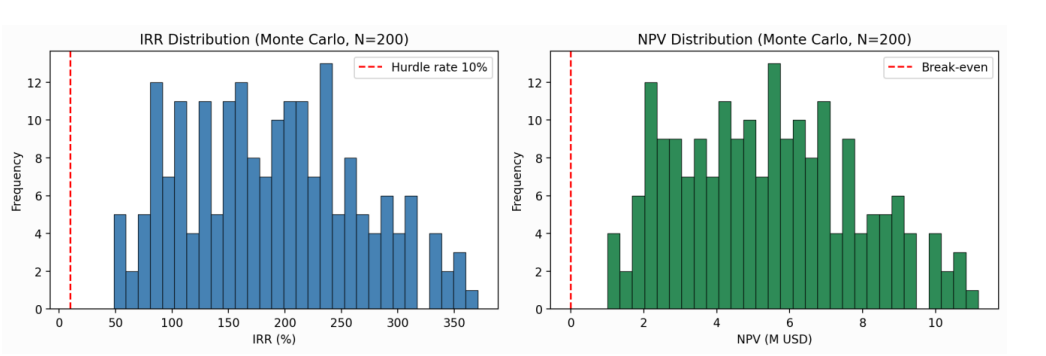
Spent coffee grounds (SCG) represent a substantial by-product produced every day by the coffee industry and are frequently disposed of, while containing valuable bioactive compounds. This study investigates the viability of recovering these compounds at a pilot scale via Soxhlet extraction, comparing ethanol and hexane as solvents through laboratory investigation, process simulation, techno-economic analysis, and life cycle assessment. Laboratory extractions were conducted using 10 g of dried SCG. Ethanol extraction yielded 21.77% on a dry basis, exceeding the 15.06% obtained with hexane, and the ethanol extract exhibited stronger antioxidant activity, with DPPH and ABTS IC50 values of 892.1± 65.4 and 565.0 ± 25.9 µg/mL, respectively, compared to 3,841.6 ± 199.5 and 3,566.6 ± 211.8 µg/mL for hexane.Caffeine content was also higher in the ethanol extract (892.46 ± 2.86 µg/g) than in the hexane extract (272.69 ± 3.06 µg/g), by a factor of 3.3. Process simulation using BioSTEAM was conducted on a continuous equivalent basis of166.67 kg/hr wet SCG. Techno-economic analysis over 10 years at a 10% discount rate showed the ethanol process achieved an internal rate of return of 164.2% with a payback period of 0.54 years, while the hexane process showed 68.0% IRR and 1.27 years payback. Life cycle assessment following ISO 14040/14044 indicated the ethanol extraction route had a lower global warming potential (0.95 vs. 2.54 kg CO2-eq per kg extract), reduced cumulative energy demand, and lower human toxicity, though it consumed more water due to the upstream water footprint of ethanol production. Overall, Soxhlet extraction with ethanol is recommended as the preferred method for producing nutraceutical-grade extracts from spent coffee grounds.