Effects of Polyethylene on Chlorophyll a and the Utilization of Microalgae as Bio-Indicators for Polyethylene Contamination in Water
Keywords:
microalgae, microplastics, polyethyleneAbstract
Contamination of polyethylene (PE), one of the most common microplastics detected in water, adversely affects aquatic microorganisms, particularly microalgae. This study examined the effects of PE particles on chlorophyll a synthesis and the sensitivity of the two tested strains, Chlorella sp. and Scenedesmus obliquus, by measuring the inhibition rate (IR). The possibility of using the tested strains as bio-indicators for PE contamination in water was investigated during the batch test. The synthesis was conducted at room temperature between 26-31°C and with light intensities of 1,700-2,200 lux. PE particles of 40-48 µm were mixed with BG-11 at different concentration levels: 50, 100, and 200 mg/L. A batch test to determine PE influences on the two tested strains was carried out for twenty-five days.
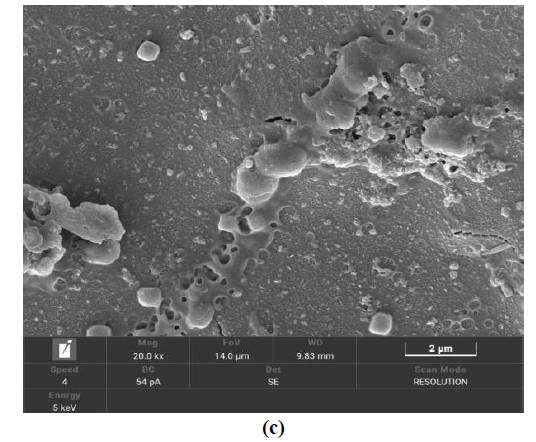
Scanning electron microscope images revealed the tested strains' attachment to the PE surface. Meanwhile, Fourier Transform Infrared Spectroscopy illustrated some structural changes from damage caused by the PE. The maximum PE concentration of 200 mg/L resulted in the lowest chlorophyll a synthesis of the two tested strains. A significant difference in chlorophyll a synthesis between the tested strains and the control was observed on the 20th and 25th day of exposure for Chlorella sp. and Scenedesmus obliquus (p<0.05). Although there was no significant difference in specific growth rate among the treatments of PE 50, 100, and 200 mg/L, the tested strain of Chlorella sp. had an induced lower specific growth rate after ten days of exposure. Notably, the tested strain, Chlorella sp., showed high growth inhibition on the 10th day of exposure in the 200 mg/L PE treatment in autoclaved natural water. As a result, Chlorella sp. showed potential as a bio-indicator for PE contamination in water because it provided a high IR with limited harmful effects.