Target and Suspect Screening of Cyanobacterial Secondary Metabolites in the Nakdong River Watershed Using LC-HRMS
Keywords:
Harmful algal blooms, microcystin, Cyanotoxins, Cyanopeptides, Suspect screening, LC-HRMSAbstract
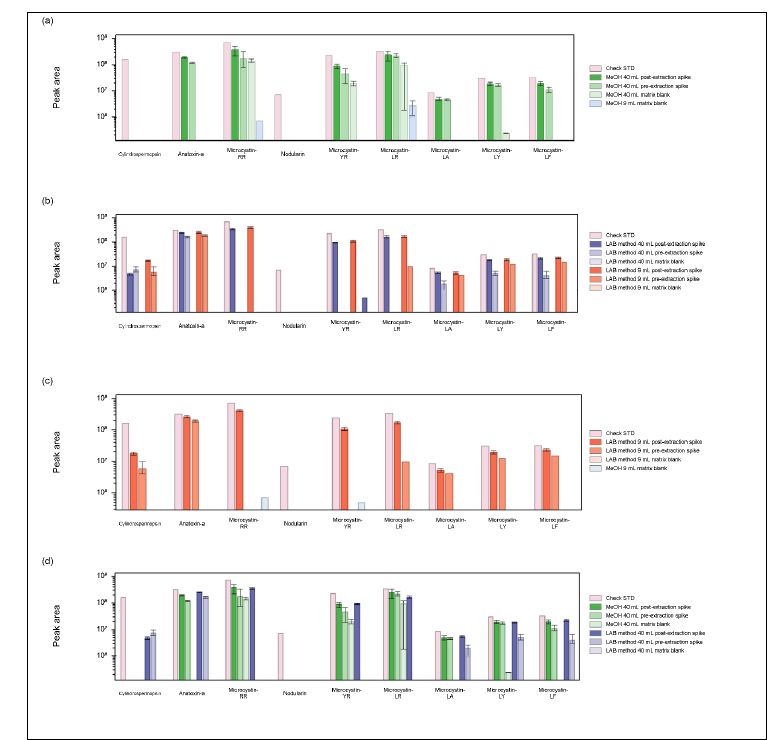
Cyanobacterial harmful algal blooms (HABs) are increasingly recognized as a water-quality concern due to climate change and associated changes in water temperature, nutrient availability, and hydrological conditions. Although microcystins and several other cyanotoxins are routinely monitored, numerous cyanobacterial secondary metabolites remain poorly characterized because authentic analytical standards are not widely available. This study developed an LC-HRMS-based analytical approach for the target and suspect screening of cyanobacterial metabolites in the Nakdong River watershed. A multilayer solid-phase extraction (SPE) procedure combining Oasis HLB with WAX, WCX, and ENV+ sorbents was optimized to improve the simultaneous recovery of cyanotoxins with different physicochemical properties. Oasis HLB showed effective retention of microcystins, whereas the WAX/WCX/ENV+ mixture effectively retained cylindrospermopsin and anatoxin-a. The optimized procedure was coupled with UHPLC-Q Exactive Plus Orbitrap HRMS for target quantification and suspect screening. Among 36 biomass samples collected in June, MC-LR showed the highest detection frequency (91.7%), with a mean concentration of 889.8 ng/L, followed by MC-LY, MC-RR, MC-LA, MC-LF, and MC-YR. Suspect screening further enabled the tentative identification of diverse cyanobacterial metabolites, including anabaenopeptins, cyanopeptolins, and microginins. Anabaenopeptin B and F were detected in 91.6% of the analyzed samples. Overall, seven cyanobacterial metabolites were quantitatively determined, while 32 additional compounds were tentatively identified through suspect screening. These findings demonstrate the complex composition of cyanobacterial metabolite mixtures in the Nakdong River and highlight the importance of expanding routine monitoring beyond currently prioritized cyanotoxins.