Bioproduction of Valued Chemicals from Waste Mangosteen Peel Using the Halomonas Cell Factory
Keywords:
Waste valorization, Mangosteen peel, Circular economy, Hydrolysis, Bioactive compounds, Halomonas elongataAbstract
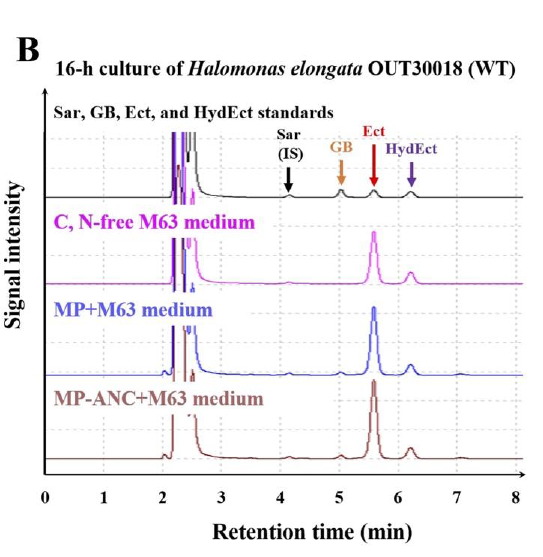
Mangosteen is one of Thailand's economically significant agricultural products. However, its processing and consumption generate substantial agricultural waste, with the peel accounting for approximately 20–30% of the fruit's total weight. The mangosteen peel is highly valuable because it contains bioactive compounds, including tannins, xanthones, and anthocyanins. Once these high-value compounds are extracted, the remaining solid residue still contains complex carbohydrate structures that can be further utilized. The aim of this research was to examine the various types and quantities of sugars extracted from mangosteen peel (MP) via chemical hydrolysis. Both raw MPs and those subjected to bioactive compound extraction were included for comparative analysis. The extracted sugars were evaluated for their potential as a cost-effective carbon source to support growth under high salinity by integrating them into metabolic pathways that produce high-value chemicals, such as ectoine (Ect), in the moderately halophilic bacterium, Halomonas elongata. Our results show that the high-salinity MP-derived media developed in this study can sustain the growth of engineered H. elongata and can be used as a feedstock for Ect bioproduction in the cells. In future studies, the MP-derived media will be used to cultivate metabolically engineered Halomonas cell factories for the bioproduction of high-value chemicals, including γ-aminobutyric acid (GABA). The knowledge gained from this research not only mitigates environmental issues associated with agricultural waste in accordance with the Circular economy concept but also maximizes the value of MP by upcycling MP-derived carbon into valued chemicals.