Comparative ESG Rating Systems and Scope 3 Disclosure in Japan andKorea: Evidence from the Electronics Manufacturing Industry
Keywords:
Scope 3 Disclosure, ESG Ratings, Electronics Industry, Japan and KoreaAbstract
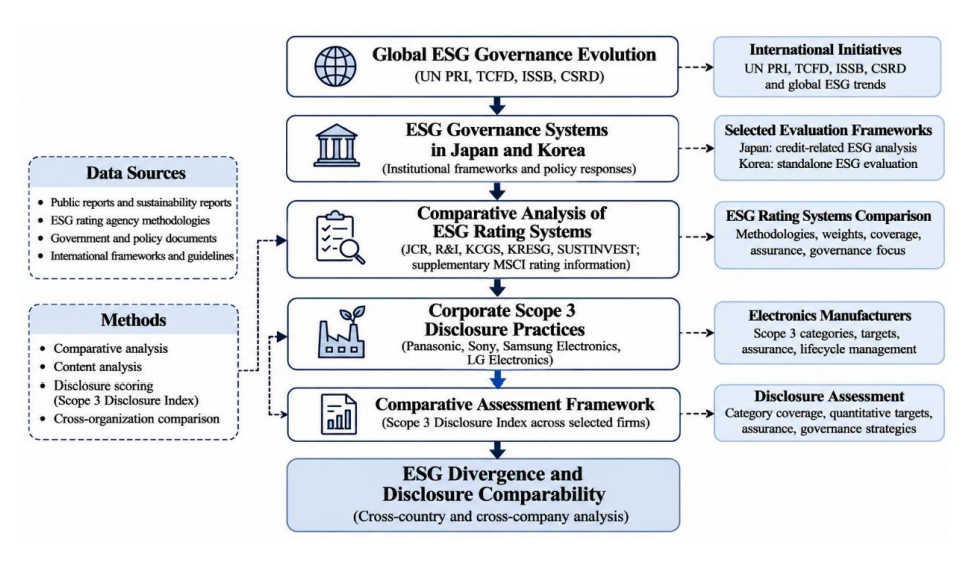
This study examines selected ESG-related evaluation systems and Scope 3 disclosure practices in Japanand Korea, with a focus on the electronics manufacturing industry. As international sustainability disclosure frameworks such as ISSB and CSRD strengthen climate-related disclosure requirements, inconsistencies among ESG rating agencies and the comparability of Scope 3 emissions data have become increasingly important issues for investors, regulators, and corporations. This study compares selected ESG-related evaluation institutions in Japan and Korea, including JCR, R&I, KCGS, KRESG, and SUSTINVEST, and analyzes their environmental evaluation methodologies, governance structures, and disclosure approaches. In particular, the study proposes a comparative ESG divergence framework focusing on weighting, boundary setting, assurance practices, and transparency of evaluation systems. In addition, this study develops a Scope 3 disclosure index to assess the comprehensiveness of corporate climate-related disclosure. The framework is applied to four major electronics manufacturers: Panasonic, Sony, Samsung Electronics, and LG Electronics. The analysis identifies differences among the selected evaluation frameworks and corporate disclosures, particularly in their stated methodologies, disclosure boundaries, and assurance coverage. It does not estimate the causes of rating disagreement or convergence over time. The findings suggest that interpretation of ESG ratings requires attention not only to corporate environmental performance but also to institutional and methodological differences among rating systems. This study contributes to the growing literature on ESG governance and sustainable finance by providing a comparative perspective on ESG evaluation systems and Scope 3 disclosure practices in East Asia. The results also provide policy implications for improving transparency, comparability, and reliability in ESG disclosure and evaluation frameworks.