Effects of Different Ammonium-N Application Rates of Biogas Wastewater on Rice Cultivation
Keywords:
Biogas wastewater, Rice production, NH₄⁺-N application rate, Pig manure, Sustainable fertilizationAbstract
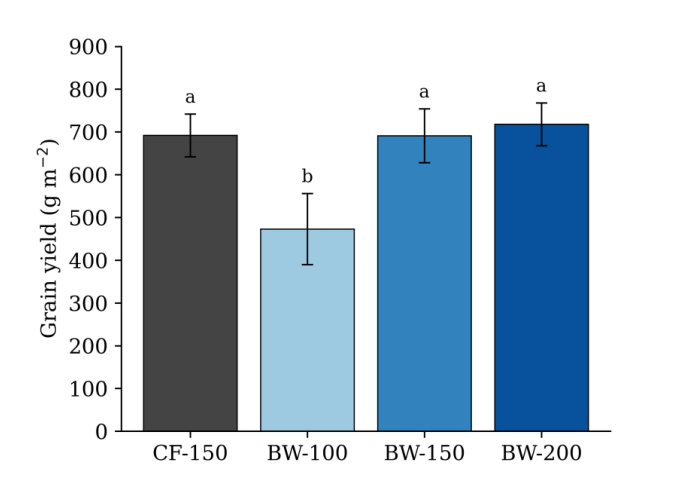
Biogas wastewater (BW) is a by-product discharged from anaerobic biogas digesters and is characterized by a high nutrient content, particularly nitrogen (N), in which ammonium (NH₄⁺-N) is the dominant form. In the Mekong Delta, pig manure-based biogas systems are widely used at the household scale, making pig manure-derived BW one of the most common organic waste streams in rural farming systems. Previous studies have demonstrated the potential of BW as an alternative fertilizer source for rice cultivation, and fertilizer management based on NH₄⁺-N concentration can yield higher rice productivity than recommendations based on total nitrogen content. However, information on the optimal NH₄⁺-N application rate for rice cultivation remains limited, particularly under practical farming conditions, where reducing BW volume while maintaining grain yield is important. Therefore, this study aimed to identify the optimal NH₄⁺-N application rate from pig manure-based BW for rice cultivation while maintaining grain yield comparable to that of conventional chemical fertilization. The experiment consisted of four treatments with three replications: one applied chemical fertilizer (CF) at 150 kg N ha⁻¹ (CF-150), while three used BW as a substitute nitrogen source at NH₄⁺-N rates of 100, 150, and 200 kg N ha⁻¹ (BW-100, BW-150, and BW-200). Results showed that grain yields in BW-150 and BW-200 were not significantly different from CF-150 (p > 0.05), with yields of 691 ± 63 g m⁻², 718 ± 50 g m⁻², and 692 ± 50 g m⁻², respectively, whereas BW-100 produced a significantly lower grain yield of 473 ± 83 g m⁻². Plant height and grain number per panicle increased with increasing NH₄⁺-N application rate. The results demonstrated that pig manure-based BW achieved grain yield comparable to chemical N fertilizer when applied at an equivalent NH₄⁺-N rate of approximately 150 kg N ha⁻¹, although BW also supplied additional organic N, phosphorus, and organic carbon. A key contribution of this study is developing an NH₄⁺-N-based fertilization approach for BW application, rather than conventional recommendations based on total nitrogen (TN) or wastewater volume. This approach enables farmers to estimate the appropriate BW application rate using simple NH₄⁺-N test kits, facilitating field-scale adoption, reducing excessive wastewater use, and promoting sustainable, biosafe recycling of livestock waste in rice production systems.